Showing posts with label Lent. Show all posts

Thursday, March 21, 2013

Palm Sunday: The Sacred Geography of Lent Part VI (Gethsemane & the Mount of Olives)

This Sunday is Palm Sunday. In the sacred geography of Lent, we are once again leaving the desert to come to the vicinity of Jerusalem. In the two Gospel readings proclaimed this Sunday, the Mount of Olives will be featured in several key events.
 
Jerusalem in the time of Jesus
The Mount of Olives (also called Olivet) is close by to the city of Jerusalem. It is actually a series of hills and in Jesus’ time filled with olive trees, hence its name. There are many significant features or events associated with the Mount of Olives. An ancient Jewish cemetery is there with the graves of some of the Old Testament prophets. The Mount of Olives is first mentioned in the Bible in connection with King David's flight from Absalom, his rebellious son: "And David went up by the ascent of the Mount of Olives, and wept as he went up." (II Samuel 15:30) From the Mount of Olives, Jesus will also weeps over the rebellious city of Jerusalem (Luke 19:37, 41).
 
In the final battle of good and evil, the Prophet Zechariah prophesies: "On that day the Lord’s feet will stand on the Mount of Olives, which is opposite Jerusalem to the east." (14:4) This is interpreted that the Messiah will stand on the Mount of Olives on the Last Day. It is on the Mount of Olives that the Risen Jesus ascends to heaven, promising to return. (Acts 1:9-12)
 
It is from the Mount of Olives that Jesus approaches Jerusalem on an ass to triumphantly enter the City which is commemorated this Sunday in the Opening Procession of Mass. Also, Jesus often stayed on the Mount of Olives, and prayed there: the Garden of Gethsemane where Jesus prayed before his Crucifixion is located at the foot of Olivet.
 
An Olive Tree in Gethsemane
The Mount of olives is, of course, the place of olives. I reflect upon all the associations with  olives, or more specifically, with olive oil in the Scriptures. Olive oil is food; it was used for sacrifice in the Temple; it was used for the oil lamps to light  home and  Temple; it was used for medicine in Jesus time (and so is associated with healing and in the Sacrament of the Sick); it was used in anointing (consecrating) kings and priests; it is a sign of the Holy Spirit (thus used in the Sacrament of Confirmation and of Ordination).
 
All these associations with anointing with olive oil point to the identity of Christ (meaning the Messiah, the "Anointed One"): He is our Food, our Sacrifice, our Light, our Healing, our Anointing and the Giver of the Holy Spirit. We might even compare Christ to the olive tree: fruitful, evergreen, source of nourishment and healing. The Psalmist says:
 
                                                            "But I am like an olive tree
                                                                 flourishing in the house of God;
                                                            I trust in God’s unfailing love
                                                                for ever and ever." (Ps. 52:8)
 
Returning to this Sunday, as mentioned, it is from the Mount of Olives that Jesus enters Jerusalem. The crowds proclaim: "Blessed is the king who comes in the name of the Lord! Peace in heaven and glory in the highest!" (Luke 19:8) A king is supposed to be an Anointed One. The crowd lay palm branches before Jesus, the palm branch being a sign of victory. Ironically, the palm branch will also become a sign of martyrdom in the Church’s symbols.
 
On Palm Sunday, also known as Passion Sunday, the Scripture Readings after the blessing and procession of palms quickly goes from triumph to impending suffering. The Psalm response, uttered by Jesus on the Cross, laments: " My God, my God, why have you abandoned me?" (Psalm 22) I enjoy whenever everything is going well in life–who doesn’t? But circumstances can change quickly in life and the challenge of our faith-life is to remain faithful to God, even in our suffering. Jesus becomes our example in this, even experiencing our times in life when we feel abandoned by God.
 
We will hear this Sunday how Jesus returns to the Mount of Olives after the Last Supper, to pray in the Garden of Gethsemane. Gethsemane is located at the foot of the Mount of Olives. The name "Gethsemane" means "olive press," i.e. a place where olives are crushed by a large stone in order to extract their oil. The heavy stone exerts pressure upon the olives, which "bleed forth" their precious oil.
 
An Olive press

 
Many have pointed out the great weight upon Jesus praying in Gethsemane as he faced suffering for the whole world. He is shaken and crushed, as the Prophet Isaiah prophesied about him:
 
                                                  "But he was pierced for our transgressions,
                                                      he was crushed for our iniquities;
                                                  the punishment that brought us peace was on him,
                                                     and by his wounds we are healed." (Isaiah 53:5)
 
He is indeed the Messiah, the Anointed One, yet his anointing comes at a heavy cost. I think sometimes of the sacrifices we must make to fulfill our vocation or role in life. We are called Christian (which means "little anointed one"), but that doesn’t exempt us from suffering at times.
 
 
We may visit Gethsemane many times, i.e. a place where we must face our own crises with prayer, seeking like Christ to do God’s will. He prayed in Gethsemane that the cup of suffering might pass him over, but he was willing to do God’s will even if he was not spared. I believe we all have these times when we are called to be martyrs: to be faithful to Christ even if it means suffering.
 
Our comfort can be that if we are forced into Gethsemane by crisis, we can hope that Christ will be there with us. Our faith tells us he is, even when we cry as he did, "My God, my God, why have you abandoned me?" Like knowing that Christ is in every desert, we can also have trust that he is in every moment of prayer in the midst of suffering. Again, the prophet Isaiah says about the Messiah: He will give the people "the oil of joy for mourning, the garment of praise for the spirit of heaviness; that they might be called trees of righteousness, the planting of the LORD, that He may be glorified" (Isaiah 61:3). I need to remember that Gethsemane is at the foot of the Mount of Olives, but at the summit, on the same Mount, is where Jesus ascends victorious into heaven.
 
Gethsemane
 
Down shadowy lanes, across strange streams
Bridged over by our broken dreams;
Behind the misty caps of years,
Beyond the great salt fount of tears,
The garden lies. Strive as you may,
You cannot miss it in your way.
All paths that have been, or shall be,
Pass somewhere through Gethsemane.
All those who journey, soon or late,
Must pass within the garden’s gate;
Must kneel alone in darkness there,
And battle with some fierce despair.
God pity those who cannot say,
‘Not mine but thine,’ who only pray,
‘Let this cup pass,’ and cannot see
The purpose in Gethsemane.
 
Ella Wheeler Wilcox
 

Thursday, March 14, 2013

Fifth Sunday of Lent: The Sacred geography of Lent Part V (At the Tomb)

In this coming Sunday’s Gospel, Jesus and his disciples are once again outside the city (see "Outside the City"). Jesus is called to Bethany, to the tomb of his friend Lazarus who has died. He comes to bring him back to life. So in our sacred geography of Lent we come this Sunday to the place of the dead, the Tomb.
 
Our spiritual desert journey with Jesus continues. When Jesus receives word that Lazarus is sick, Jesus and his disciples are in the desert where John the Baptist had ministered: "beyond the Jordan [River]." (See John 10:40) Why is Jesus there? Is he revisiting the place of his Baptism?
 
At Easter we will renew our Baptism Promises in a solemn way. There is also a Prayer Station at our parish’s Baptism Font where this may be done.
 
When Jesus does return to Bethany he does not enter the town. He encounters Martha, Lazarus’ sister, and then goes to the tomb. He is in grief; the city and its attractions and distractions hold no comfort for him. Instead, sharing fully in our humanity, he confronts the emptying of emotions in grieving a loved one. He is truly in one of the involuntary deserts almost all of us must travel at some point: the desert of grief.
 
 
In the Funeral Intercessions used at Holy Faith, one petition asks: "For the family and friends of N., that they be comforted in their grief by the Lord, who wept at the death of his friend Lazarus. Let us pray to the Lord. R."
 
The description of John that "Jesus wept" (John 11:35) is perhaps one of the more moving verses of all Scripture. In this act of weeping for his friend, Jesus is in solidarity with each of us when we weep at the death of someone we love; when we weep at the grave of a loved one. I would say that those tears of Jesus are almost as precious as his blood shed for us. He was human like us, with flesh and blood like us, in all things but sin; and he also shares our weeping. His blood pleads for forgiveness of our sins; his tears assure us of his compassion.
 

The place of the tomb as part of the sacred geography of Lent is a concrete reminder of the reality of death. In life we are often separated from the ones we love because of work or distance. When someone we love dies, we could try to pretend that they are just away on a trip or some other denial of death. But we cannot deny the loved one’s death when we stand at their grave.
 
Recently I was at the interment of my Aunt’s cremated remains at the Barrancas National Cemetery in Pensacola (my Uncle was in the Air Force and will also be buried with her one day) At that same Columbarium are the cremated remains of my Father and Mother. As I also visited their place of burial, read their names and the dates of their birth and death, I felt the sadness of their not being here with me in this life. Yes, they are dead and here are their remains, there is no denying it.
 

But death is not the final word of our lives; it’s not the final chapter. Jesus has the final word and that word is "life." The Gospel reading for March 13 was from John 5 and included these words:
 
"Amen, amen, I say to you, whoever hears my word
        and believes in the one who sent me
has eternal life and will not come to condemnation,
but has passed from death to life.

Amen, amen, I say to you, the hour is coming and is now here
when the dead will hear the voice of the Son of God,
and those who hear will live....

Do not be amazed at this, because the hour is coming
in which all who are in the tombs
will hear his voices and will come out,
those who have done good deeds to the resurrection of life,
but those who have done wicked deeds
to the resurrection of condemnation." (vv.24-25, 28-29)


Jesus speaks of passing from death to life. We usually think of our lives as passing from life to death: we are born, we live for a time for however long, and we die. But with Jesus, as is often the case, this is turned upside down: we are dead but he brings us to life! This is called his Paschal (or Passover) Mystery. It is the passing from death to life. We who follow Christ believe we will take this passage (passing) along with him to eternal life and in a resurrection of the body like his.
 
But even now we are passing from death to life and this was begun in our Baptism. The full form of Baptism in the ancient church was at first full body immersion into the waters of a river, lake, or later a Baptism Font–large enough to accomplish this. Adults were at first the majority of those baptized. When they went down into the waters fully immersed, it was like going down into a grave. Coming up from the waters was like coming up out of the grave. Thus St. Paul writes to the Romans:
 
"Or are you unaware that we who were baptized into Christ Jesus
were baptized into his death?
We were indeed buried with him through baptism into death,
so that, just as Christ was raised from the dead by the glory of the Father,
we too might live in newness of life.
For if we have grown into union with him through a death like his,
we shall also be united with him in the resurrection." (Romans 5:3-5)


Lazarus rises from the Tomb
(It almost looks like he was baptized)

Our Baptism initiates us into a lifetime of passing from death to newness of life. It immerses us in the Passover Mystery of Christ. He died and was buried and then was raised to new life. The "spiritual dying" we must do is to die to sin and selfishness so that we can pass into his new life of love. Love demands a dying to selfishness so as to love another.
 
This twin theme of death and life in Baptism led to the early Church to call the Baptism Font both tomb and womb! Some of those adult Baptism Fonts were even shaped like a tomb or perhaps a Cross as is the Adult Font at Holy Faith.
 
In this sacred geography of Lent we come to the Tomb of Lazarus and behold it is empty! We will hear that the Tomb of Jesus will be empty on Easter Sunday. Tombs bring us face to face with the reality of death. The empty Tomb reminds us that in Christ death will not hold us, but we will obey the word of Christ and come out of our places of death whatever they may be.
 
                                                                                 +   +   +
 

                           Just Call Me Lazarus

                        by Sarah Fletcher, © 2013

A people born wearing their funeral clothes,
we don't even know there's a stone. We sit in our grave,
dirty feet, dirty cave, and trace patterns into
the ground. The sweat of our brow drips in rivulets;
a salt-imbued lie of release. A taste of the sea,
of a river, a spring, of a well we're too haughty to drink.
We think we're so rich in our tatters. We think
we're so bright in the dark. We think we are kings
in our coffins and schemes like this is the best that
we are. Like there isn't a voice small inside us.
Like there isn't a breath in our lungs. Like there
isn't a world waiting just out that door if we'd
only stand up and explore. Like there isn't a man
calling out to us. Like we don't hear our name in a
prayer. Like we don't see the stone for the lid
it's become on the room we see fit to call home.

I no longer choose to abide this. I no longer want to
subside. I want to be strong and impassioned and
torn by the wind and His name and the horn. I
want to be fashioned for battle. I want to wear
armor and light. I want to sing hours and hours on
end with no ceasing in day or in night. I want to
feel roads underneath me. I want to drip words
from my tongue. I am done with the silence, the darkness,
the violence, that my evil days often had sung.
I no longer revel in drunkenness. In sculpting my
face to a norm. In starving and fighting, in lying
and hiding, in valuing how I perform. We need to
rely on the 'other'. That power found outside our own.
I need to escape, to find spirit, take shape- this
tomb is no longer my home. I will resurrect.


Return to Home Page

Thursday, March 7, 2013

Fourth Sunday of Lent: The Sacred Geography of Lent Part IV (In the City)

As I continue my meditation about the sacred geography of Lent, I wonder if the particular landscapes and cityscapes mentioned in the Gospels of Lent speak to the spiritual imagination of others as they do to me. I came across an encouraging essay that begins "In the history of Christian faith, landscape and spirituality are frequently intertwined." (Belden C. Lane, "Landscape and Spirituality.")

I know that such things as deserts and mountains are archetypes of the human psyche. They represent a symbolic constellation of experience, desire, emotion, stories and images hard to describe. Last week I found it instructive to think about encounters of Jesus, such as with the Samaritan Woman, that are "outside the city," as that would have been understood in Antiquity as a meeting on the margins with the marginal.

So what will the upcoming Sunday bring? Are we still following Jesus in the desert? This Sunday we find Jesus not outside the city this time, but in the city; and not just any city, but in Jerusalem. There he encounters a Blind Man and heals him after the man washed in the Pool of Siloam.
 
Jerusalem, Nuremberg Chronicle, 1493

Jerusalem is mentioned in both the Old and New Testaments. It was the new capital of King David’s reign (c. 1002–970 BC); David’s son Solomon built the first Temple there. Jerusalem came to symbolize both the place of right worship of God with the ritual sacrifices in the Temple and as a place of pilgrimage for the People of Israel.

Jesus as a child made pilgrimage with his family to Jerusalem. Later he would teach there and be tried and condemned to death in Jerusalem. It was outside the city walls of Jerusalem that he would be crucified. So this city, holy to the Jews, also became holy to Christians. But for Christians, the significance of Jerusalem transcended the actual city which would be destroyed by the Roman army in 70 AD and then rebuilt later over time. For Christians, what is of greatest meaning is the Heavenly Jerusalem (also called the New Jerusalem) which at the Second Coming of Christ comes down from heaven, "as a bride adorned for her bridegroom." (Revelation 21:2)

Heavenly Jerusalem  1580
 Fresco in Annunciation Cathedral, Russia

In the ancient Church and also very prominently in the Medieval Church, especially among the monks, was this longing for this Heavenly Jerusalem, which the monastery or the Church on earth might be an anticipation of heaven.

I find this in my own spirituality and spiritual imagination as something very attractive. I remember when I was in the seminary and first read a classical work on Early and Medieval monasticism called The Love of Learning and The Desire for God by Dom Jean LeClerq.

LeClerq details one of the themes of the monastic culture which was this longing for heaven, focused on the Heavenly Jerusalem. This was reinforced by the daily prayers of the monks taken from the Psalms with their frequent reference to Jerusalem.

Over the years I, too, have come to long for that Heavenly Jerusalem. Our celebration of Mass is also a participation in what is called the Heavenly Liturgy of Christ with his angels and saints and the blessed of heaven. "In the earthly liturgy we share in a foretaste of that heavenly liturgy which is celebrated in [heaven:] the Holy City of Jerusalem toward which we journey as pilgrims..." (Catechism #1090)

The interesting outcome of focusing upon and longing for the Heavenly Jerusalem is that it replaces any other place in this world with no place in this world. Or as the author of the Letter to the Hebrews (13:14) says: "For here we do not have a lasting city, but we are seeking the city which is to come." In other words, we are pilgrims or exiles in this world. Thus "biblical imagery of exile, wandering in the desert, and foreignness, as well as the concept of the heavenly Jerusalem adopted by Christianity from its infancy, prevailed in Christian literature..." (Encountering the Sacred: The Debate on Christian Pilgrimage in Late Antiquity. Bruria Bitton-Ashkelony, p. 111)

A perfect heavenly city of course contrasts with imperfect earthly cities. We may be pilgrims and exiles, but Catholics have always been solidly connected with specific places. Early Christianity was essentially an urban phenomenon. The New Testament letters were communiques with the Christians in particular cities, like Rome, Corinth, Ephesus, etc. But cities have an ambivalent reputation in the Scriptures. Andrew Crook writes in an essay on the subject:

"Cities, like human beings, do not get a very good press in the Bible. Their origins were in sin, rebellion and violence, and they continued in this vein. They were concentrations of oppression, corruption and bloodshed, as well as paganism and immorality.
 
"However, as with individual humans, God's reaction to this was not one of anger but of compassion. It appears that he has a redemptive plan for urban life, which will only be completed with the unveiling of the new Jerusalem, but which will be foreshadowed by the work of his people in earthly cities." ("The City in the Bible: A Relational Perspective.")
 

So in the spiritual geography of this upcoming Sunday, I think about the challenge of living in the city. I have mentioned that there was a movement in the early Church where some Christian men and women fled the distractions and temptations of the city. This would develop into monasticism. Most of us, however, have to live in the city, negotiating those distractions and temptations, bringing the lessons of the desert into the city (such as prayer and fasting).

This Sunday’s Gospel reminds us that just as the Blind Man was healed in the city of Jerusalem, so we can meet Jesus in the city, wherever that city may be, as well. He is the Light of the world, and his Light is greater than the city lights.
                                                                                     +   +   +
 
From an Anonymous Monk of the Benedictine Abbey of Bèze (early 12th century?): "Elevations on the Glories of Jerusalem" (quoted in Jean Leclercq OSB, The Love of Learning and the Desire for God: A Study of Monastic Culture, ch 45).
 
The frequent recollection of the city of Jerusalem and of its King is to us a sweet consolation, a pleasing occasion for meditation and a necessary lightening of our heavy burden.
 
I shall say something briefly – and, I hope, usefully! – on the city of Jerusalem for its edification; and for the glory of the reign of its King I shall speak and I shall listen to what the Lord within me tells me of Himself and of His city...
 
May your soul leave this world, traverse the heavens themselves and pass beyond the stars until you reach God. Seeing Him in spirit and loving Him, may you breathe a gentle sigh and come to rest in Him…
 
The city of Jerusalem is built upon the heights. Its builder is God. There is but one foundation of this city: it is God.
 
There is but one founder: it is He, Himself, the All High, who has established it.
 
One is the life of all those who live in it, one is the light of those who see, one is the peace of those who rest, one is the bread which quenches the hunger of all; one is the spring whence all may drink, happy without end.
 
And all that is God Himself, Who is all in all: honor, glory, strength, abundance, peace and all good things. One alone is sufficient unto all.
 
This firm and stable city remains forever. Through the Father, it shines with a dazzling light;
through the Son, splendor of the Father, it rejoices, loves; through the Holy Spirit, the Love of the Father and the Son, subsisting, it changes; contemplating, it is enlightened; uniting, it rejoices. It is, it sees, it loves.
 
It is, because its strength is the power of the Father; it sees; because it shines with the wisdom of God; it loves, because its joy is in the goodness of God.
 
Blessed is this land which fears no adversity and which knows nothing but the joys of the full knowledge of God.
 
Now, each has his own garment; but in the eighth age, the armies of the blessed will bear a double palm. All will know. All words will be hushed and only hearts will speak.


Thursday, February 28, 2013

Third Sunday of Lent: Sacred Geography Part III (Outside the City)

Continuing our journey through the "sacred geography" of Lent, this Sunday we come to the story of the Woman at the Well. The next three Sundays of Lent are from Gospel stories used to teach about Baptism, because Lent is preparing us to celebrate Baptism at Easter (we baptize adults and youth and we renew our own Baptism promises at Easter).
 
So the story of the Samaritan Woman and her encounter with Jesus takes place at a well. It is Jacob’s Well outside the town of Sychar, in ancient Samaria. The first thing we may note in this Sunday’s sacred geography is that this Well is outside the city. In other words, it is not inside the city walls but one had to go out of the city to get to this well. We know the well was outside the city because John notes that when Jesus stopped to rest at the place, "A woman of Samaria came to draw water. Jesus said to her, ‘Give me a drink.’ His disciples had gone into town to buy food." (4:7-8)
 
A photo from 1914 shows this "out-of town" location, and the ruins left of an ancient church that had been built by Emperor Constantine’s mother, St. Helena:
 
Jacob's Well circa 1914 (Note the Woman with a Water Jar)
Now there is an Orthodox Chapel built over the place, begun in 1960.
 
 
What is the significance of this encounter with the Samaritan Woman outside the city? There are several connections with Lent and Baptism. Recall ancient Christians went into the desert to get away from the distractions and temptations of the city. We still do this in the Season of Lent when we go into the desert in a spiritual sense. It is good for us to fast from our distractions during Lent so as to better hear God and meditate on what is truly life-giving.
 
Second, symbolically, being outside of the city was to enter the margins of society: outcasts, lepers, the homeless, the exiles, the unclean, lived there. There is a very significant Bible passage that connects Jesus with these marginal and least ones: "Therefore, Jesus also suffered outside the city gate, to consecrate the people by his own blood. Let us then go to him outside the camp, bearing the reproach that he bore." (Hebrews 13:12-13)
 
In other words, Jesus was crucified outside the city of Jerusalem, on Golgotha, where criminals were put to death. He identifies himself with all others who are rejected and cast out of society. And we are to go to him and also identify with the lowly. We are to see him in the least of his brothers and sisters: the poor, the hungry, the naked, the sick, the prisoner. (See Matthew 25)
 
Crucifixion by Balogh Balage (2005)
 
A Methodist minister, Jill Sander-Chali, notes:
 
"But, the location of this sacrifice beyond the gates of the city matters... It implies that the place outside the city is also redeemed; that the people outside the city are also redeemed; that those once considered unclean are no longer to be treated as outcast, but rather are to be brought into the community of the blessed and sanctified.
 
"Throughout his whole life and ministry, Jesus danced in and out of the gates of the city. He certainly loved the rich and powerful and he taught them about giving up wealth and material gain in order to truly be his disciples. But he also loved the poor and the outcast.
 
"Much of his ministry took place beyond the gates of the city, at the margins of society. He healed people and taught his disciples on the roads while they traveled between cities. He ate with tax collectors and prostitutes and he touched lepers to make them clean. The group of people he called to be his 12 primary disciples were mostly fisherman, who were living and working outside the gates of the city. One of his favorite images for God was that God was like a shepherd taking care of and protecting the flock, beyond the gates of the city. 
www.universityumc.com/sermons/2012/5/10/jesus-sacrifice-beyond-the-gates.html
 
Now we can see the significance that  Jesus met this Woman of Samaria  outside the city because we learn that she is on the margins of her society and a second class citizen in the eyes of Jews for being both a woman and a Samaritan ("For Jews use nothing in common with Samaritans." John 4:9) She came to the Well at Noon, alone, the hottest part of the day and a time not normal for drawing water, usually a communal activity of the women. She had been rejected by five different husbands and was finally living outside of marriage. But Jesus is going to speak to her, confer upon her forgiveness and dignity, and restore her to the community, by offering her living water. He does this for us also, in Baptism:
 
"For as many of you as were baptized into Christ have put on Christ. There is neither Jew nor Greek, there is neither slave nor free, there is neither male nor female; for you are all one in Christ Jesus." (Galatians 3:27-28)
 
"Therefore, if anyone is in Christ, he is a new creation; old things have passed away; behold, all things have become new." (2 Corinthians 5:17)
 
"But you are a chosen people, a royal priesthood, a holy nation, a people belonging to God, that you may declare the praises of him who called you out of darkness into his wonderful light." (1 Peter 2:9)
 
"For we were all baptized by one Spirit into one body [i.e., his Church]–whether Jews or Greeks, slave or free–and we were all given the one Spirit to drink." (1 Corinthians 12:13)
 
I found a very interesting icon of Jesus and the Samaritan Woman where the Well is in the shape of the Cross. Our Baptism Font at Holy Faith is in the shape of a Cross, deliberately designed so.
 
In Baptism we are marked with the Sign of the Cross and die and rise with Christ in the Spirit in the waters of Baptism.
 
 There is another detail about the story where the woman lays down her heavy burden, her water jar, and leaves it behind to go to town and tell about her liberation in meeting this Messiah. I write about that in more  detail in this Sunday's bulletin.
 
I think about the times when, like the Samaritan Woman, I have known rejection and shame. My relationship with my father when I was a child and a teen was not a good one. My father was abusing alcohol during that time and when he did so was abusive verbally. I am very blessed that he stopped drinking when I was 18 and we had over 30 years to have a new and loving relationship till he died at 69.
 
At 14 years old, I was blessed to be introduced to Jesus and his love. I was baptized then. It was also the time I experienced being a member of a church and especially a community of other youth following Jesus. I don’t know what kinds of trouble I was literally saved from by having my rejection and shame start to be healed by Jesus (though the healing took a very long time and I would experience various troubles along the way, but always Jesus and his Church were there, the Bedrock of my life). I know what it is to be weighed down and I know what it is to be set free by the Messiah outside the city gate.
 
THE SAMARITAN WOMAN SPEAKS
I didn’t expect that day to find him there,
His tired legs stretched out along the ground—
For I’d come late, just to avoid the stares,
The winks, the giggled whispers, and the frowns
Of all the other women of the town.
 
I didn’t expect t find him there that day,
His weary back propped up against the well
(For the burdens of the whole world seemed to weigh
Upon his mighty shoulders), but we fell
To talking. Who he was, I could not tell.
 
But he could tell me everything that I
Had ever done. His words into the core
Of my soul struck, and burned, and made me cry.
And I, who’d known so many men before—
Could I dare think that he was something more?
 
A prophet, surely—you could see he knew
Things that no ordinary man could know.
And when he spoke of God, his words rang true,
As if he knew firsthand that they were so.
 
"I know Messiah’s coming, and He will show
Us all things when He comes," I said, and he
Gave me a look that made my heart stand still
In wonder, fear, and awed expectancy
 
To hear what he would say. His words were chill,
Like a drink from the mountain-high spring that refreshes and fills!
And all that he has said was "I am He."
I ran back to the town to tell the rest,
"Messiah is at the well! Oh, come and see!"
 
Some stared at me as if I was possessed
Or the maker (or brunt, perhaps) of some bad jest,
But some there were who did come back with me
To my new master, Jesus, there to be
From all their load of sin and self set free.
 
–Donald T. Williams


Thursday, February 21, 2013

Second Sunday of Lent: The Sared Geography of Lent Part II (The Mountain)

The "sacred geography" of Lent is one way to chart the pilgrim journey through the Season of Lent.  "By the solemn 40 Days of Lent the Church unites herself each year to the mystery of Jesus in the desert." (Catechism #540) The basic spiritual landscape, so to speak, that we enter into during Lent is the desert. You may go here and here to read more about what a desert experience is like. The point, however, is to be with Jesus in the desert, whether it is the spiritual desert of Lent or one of our personal "deserts of crisis" in life.
 
The First Sunday of Lent describes how Jesus is led into the desert after his Baptism at age 30. That Baptism was a "spiritual high" for him: the Holy Spirit descended upon him and the Voice of the God the Father was heard declaring, "This is my Beloved Son in whom I am well-pleased."
 
Yet after this high-point in the life of Jesus, he goes into the desert and is tempted by the devil. We might take note that often in life a high-point may be followed by a low-point.
 
It is curious that in our "sacred Lenten geography," on the Second Sunday of Lent, we are given the image of going up a mountain. Obviously, there are mountains in deserts. Just as deserts correspond to spiritual and personal conditions, so mountains also do the same. Mountains are places one ascends, getting closer to the heavens. In many religions, mountains are sacred places where one can get closer to God. Mountains are also places of greater vision: obviously, you can see further  on the top of the mountain than in the valley. Mountains can be places of sacrifice to God.
 
In the Old Testament, mountains serve all these functions. It was on Mt. Zion, in Jerusalem, that Solomon built the Temple where sacrifices were made to God. It was on a mountain that Moses encountered God in the burning bush (Exodus 3) and later Moses ascends Mt. Sinai to receive the Covenant of God’s love for God’s People (Exodus 31:18). It will also be on a mountain, at the end of his life, that Moses will see the Promised Land but not enter it. (Deuteronomy 34:1-6)
 
 Dr. Martin Luther King, Jr. alluded to this last passage in a famous and even prophetic speech he gave in 1968: "Like anybody, I would like to live a long life. Longevity has its place. But I'm not concerned about that now. I just want to do God's will. And He's allowed me to go up to the mountain. And I've looked over. And I've seen the Promised Land. I may not get there with you. But I want you to know tonight, that we, as a people, will get to the promised land! "(April 3, 1968)
 
 The mountain mentioned on the Second Sunday of Lent is the mountain Jesus went up, with his disciples Peter, James and John. Luke’s Gospel, read this year, says that Jesus went up to the mountain to pray. It was while in prayer that he was transfigured in the sight of these three disciples.
One of the disciplines of Lent is to renew and increase our prayer. Only in prayer, both liturgical and alone, do we encounter God and receive his vision and are lifted up by his Presence. The mountain reminds us that whenever we are in a desert, we need to take time to go up the mountain to pray. It leads to transformation. It was also on that Mountain of Transfiguration that God says about Jesus once again: "This is my Beloved Son! Listen to him." In prayer, we rediscover God's love for us as did Jesus.
 
So, as soon as we enter the spiritual desert of Lent, the Church reminds us that we are not always meant to live in the desert, or in a state of wandering and exile, or "mourning and weeping in this valley of tears." God is taking us somewhere, and not to just anywhere, but to the mountain: the mountain of God’s love and the Resurrection life of Christ, which is experienced in part even now. This mountain that we hear about on this Second Sunday of Lent is a place where Jesus is Transfigured (transformed) in glory. The reason, Pope St. Leo the Great says, is this: to strengthen the disciples for the suffering of the Cross by their being able to recall his glory prefigured in the Transfiguration.
 
In other words, we cannot bear the Cross of Christ unless we are strengthened by his Resurrection, and not a Resurrection just in the future, but even now like a "down payment" of our transfiguration. There is no desert, then, for the disciples of Christ without the mountain; no dying without the rising; no Cross without the promise of the Resurrection. In an excellent book by John Moses titled The Desert: An Anthology For Lent, the author says:
 
"The desert is never an end in itself. It is a time of preparation, of testing, of transition. The long years of the exodus lead from slavery to freedom.
 
"The disciplines of prayer and study and fasting have always counted for much in the desert tradition. These ascetical disciplines have been concerned from the beginning to bring under control the appetites of the flesh and to focus the mind on the things of God. But there lies beyond all these spiritual disciplines the vision of a life that is set free and restored and renewed. [St. Irenaeus says:]‘The glory of God is a man or woman who is truly alive.’" (p.20-21)


Thursday, February 14, 2013

First Sunday of Lent: More About the Spiritual Desert and Lent

This meditation is a continuation of the "sacred geography of Lent" about which I wrote last week. If we are to understand the significance of being in the spiritual desert of Lent, then we must understand why the desert experience is used to describe Lent.
 
Pope Benedict preached on Ash Wednesday (February 13, 2013) these words:
 
"First of all, the desert, where Jesus withdraws, is a place of silence, of poverty, where man is deprived of all material support and is faced with the fundamental questions of life, he is prompted to examine that which is most essential, and hence it is easier to meet God. But the desert is also a place of death, because where there is no water there is no life, and it is a place of solitude, where man feels temptation more intensely. Jesus goes into the desert, and there undergoes the temptation to leave the path indicated by God the Father, to follow other, easier and worldly paths (cf. Lk 4:1-13). And so he bears our temptations, takes upon himself our misery, to defeat the Evil one and open us to the way towards God, the way of conversion."
 
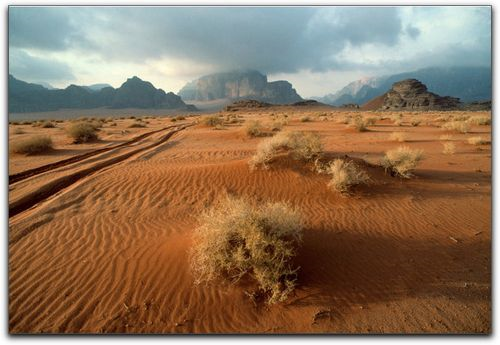
A desert is usually defined as an arid, dry place, as Pope Benedict says, a place with no water. For this reason, it is sparsely populated and often remote or isolated. But any isolated or semi- isolated place can be called a desert. When I was in Venice, Italy, my Franciscan host took me to an island outside of Venice called "St. Francis in the Desert" or simply "The Desert." It is said that St. Francis stayed on this island once when in Venice to get away from all the distractions and noise of that city.
 
Today that island is not on the usual public "water bus" route. We took a private boat to a semi-deserted island, with a few buildings and a church. The rest were trees and bushes all surrounded by water. In the 19th century an English visitor and his lady boated to "St. Francis in the Desert." He later wrote:
 
Cloister at St. Francis in the Desert" Venice
‘How lonely,’ so she said, ‘how still, how fair!
Tell me the story why they call this place
"St. Francis of the Desert." Silent air,
And silent light sleep here, and silent space.’
...
All pleased, but most the silent solitude;
The still Franciscan walking slow and grave,
The absent life wherein no cares intrude,
 
Obedient, chaste and poor--alone with sea
And sky and clouds and winds and God's still voice;
Unvexed by the clamorous world, and free
For worship and for work, to die or to rejoice.
Stopford A. Brooke
 
 
The desert "is a place of solitude" says the Pope. In other word, a place where one may feel alone or be alone. I would say that any desert is a place with few distractions as opposed to the city or civilization. Because of this, the desert does make one face the fundamental needs and questions of life.
 
But most of all, the desert–at least the dry kind–can have the threat of death hanging over it. One may think, "Am I going to get out of here alive?" It is often the place of temptation, or testing, and there is no guarantee that the test will go well. The "spiritual version" of this is when we find our selves in some kind of crisis, some invitation to let go of old ways that are harming us, a time of personal suffering, of "letting go." We often do not welcome such times "in the desert" and most of them are involuntary.
 
In Mark’s version of Jesus in the desert it says: Then the Spirit drove him out [forced him] into the desert, and he remained in the desert for forty days, tempted by Satan. He was among wild beasts, and the angels ministered to him." (Mark 1:12-13)
 
We would only have half the picture of the desert, however, if all we saw was the hardship and the dying ("letting go"). The desert can also be a very beautiful place. One website on the desert says: "The desert often invokes images of a vast expanse, a timeless space of beauty, wonder and longing. Many come to the desert to commune with a higher power or the forces of nature. Indeed, for much poetry about the desert was an allegory for a spiritual quest." (www.squidoo.com/desert-beauty)
 
 
Some people choose to live in the desert. A whole movement in the early Church inspired men and women to go and live apart from the city and in the desert. This was the prototype of monasticism. Others, like Blessed Charles de Foucauld, voluntarily lived in the solitude of the desert, seeking God and loving neighbor.
 
The "spiritual desert" of Lent allows us to go into the desert voluntarily. In other words, "on our own terms." By fasting and eliminating some of our distractions, by attentive prayer and some silence and solitude, by hearing the Scripture Readings and liturgies of Lent, we can think about the most fundamental questions of life. I like to think of the voluntary desert journey as a way of preparing for those inevitable times of involuntary desert crises. But the big lesson for me on the approaching First Sunday of Lent is that Jesus goes into the desert and is tested and this also means Jesus can be found in the desert–in our desert, to help us always.


Thursday, February 7, 2013

Introduction:The Sacred Geography of Lent Part 1 (The Desert)


We are less than a week away from the beginning of Lent (Ash Wednesday is on February 13 this year). Several years ago, a statement from the Vatican on Lent and Easter caught my imagination:
"The annual Lenten season is the fitting time to climb the holy mountain of Easter." ("On Preparing and Celebrating the Paschal Feasts," no.6)
I already had my spiritual imagination inspired for many years by the desert imagery of Lent. In fact the Catechism states: "By the solemn forty days of Lent the Church unites herself each year to the mystery of Jesus in the desert." (#540; emphasis added)


These two images: the Desert of Lent and the Mountain of Easter suggest that there is a "sacred geography" of the Lenten journey that leads to the heights of Easter.  However, this journey is a pilgrimage, not through a physical landscape, but rather through a spiritual "soul-scape," an "inner landscape," if you will, which is shaped by the Biblical imagery and geography used in Lent.
 
I Google-searched "sacred geography" and found this quote about what I am getting at:
 
"The routes devised for pilgrimages to sacred places, whether natural or built, were another kind of sacred geography. All ancient pilgrimage routes are choreographed so that pilgrims get glimpses of the holy destination from certain points along the way, or else the route takes them by places where miracles or other events associated with the pilgrimage are said to have taken place."
 
(Paul Devereux, "Mindscapes: The Varieties of Sacred Geography," Noetic Now Journal, Issue Three, October 2010)
 
The First Sunday of Lent begins the desert imagery of Lent: "Filled with the Holy Spirit, Jesus returned from the Jordan and was led by the Spirit into the desert for forty days, to be tempted by the devil." (Luke 4:1)
 
An excerpt from a Benedictine website captures many of the themes of what the desert represents in our Christian tradition:
 
"The desert can be a setting for deepened, renewed inner life, but it can as easily be life-threatening. The desert demands decisions, choices, and we have to make the right ones or our lives are in danger. In the desert we are stripped down to essentials....
 
 "It is a place where one cannot hide from one’s own truth. The desert is also the place of the greatest closeness to God....The desert in this biblical and spiritual sense is never a place to stay. It is a situation to go through…you journey on and out....
 
 "When Jesus was praying at the time of his baptism, the Holy Spirit came upon him…he was led by the Spirit into the desert….There he remained forty days. When the devil left Jesus alone, Angels came and ministered to him. The desert of temptation became the mountain of paradise....
 
 "The desert experience is our spiritual purification for a new life of freedom and love in the land that God will show us. Like the Prophet Hosea (Hosea 2:16) the Lord God promised Israel that they will be led into the wilderness, where God will speak to [their] heart..."
 
 
I have never lived in an actual desert but I have visited the desert of the soul many times. Those are the times when felt like I was in some dry and lifeless place, confronting the excesses of my life; the times of getting free from some addiction enslaving my soul, weighing it down. These times were always invitations to die to something to which I was too attached.. This is because these times are like the actual physical desert: a place where one cannot carry a lot of baggage; a place that demands that one pay attention to what is essential for life: water, food, shelter. But it also can be a place where distraction is stripped away and there is an opportunity to finally be silent and listen to God.
 
The Psalmist laments:
                                       "O God, you are my God, earnestly I seek you;
                                                my soul thirsts for you, my body longs for you,
                                        in a dry and weary land where there is no water." (Psalm 63:1)
 
Yet the desert is precisely where life-giving waters are most appreciated. "On the last day of the feast, the great day, Jesus stood up and cried out, ‘If anyone thirsts, let him come to me and drink’". (John 7:37)